No ready-made things.
When we built this house, we made one promise: never to settle for something off the shelf. The floors, the pillars, the fittings — only things someone, somewhere, put their own effort into. A house where you can see the faces of the people who made it. And, wherever possible, connections from this place.
Made by island hands, with things and people connected to the island.
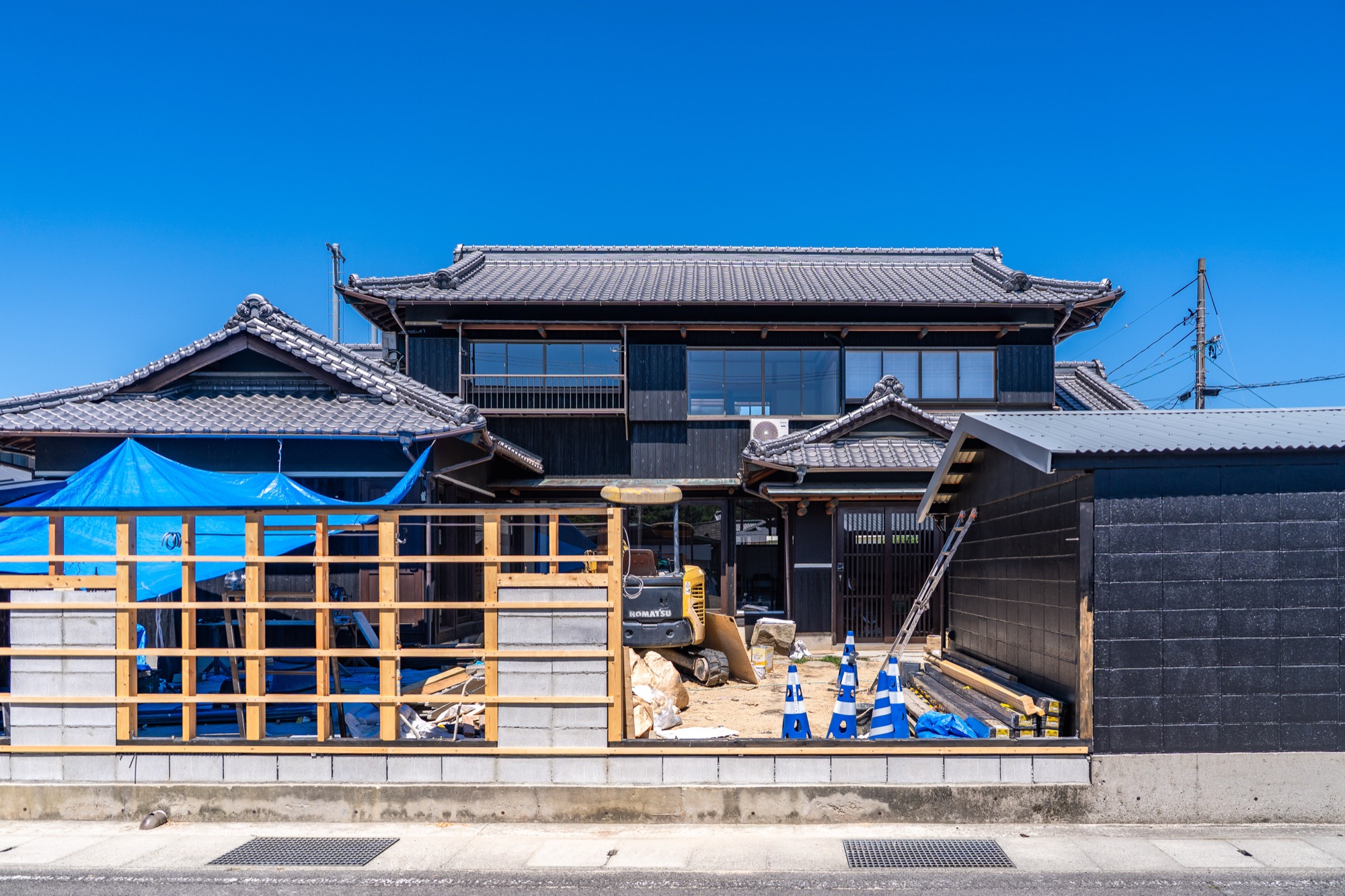
Built by island hands.
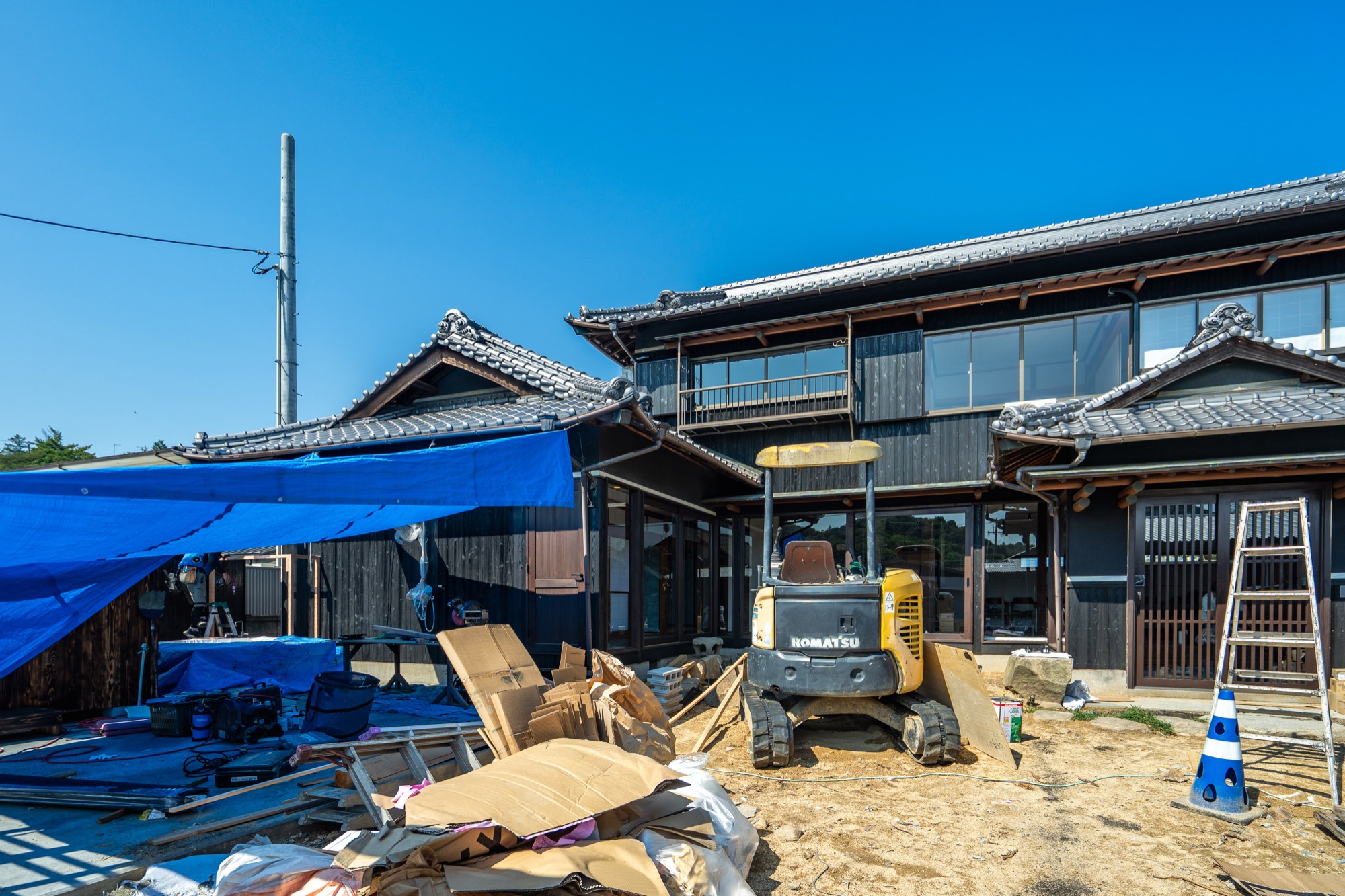
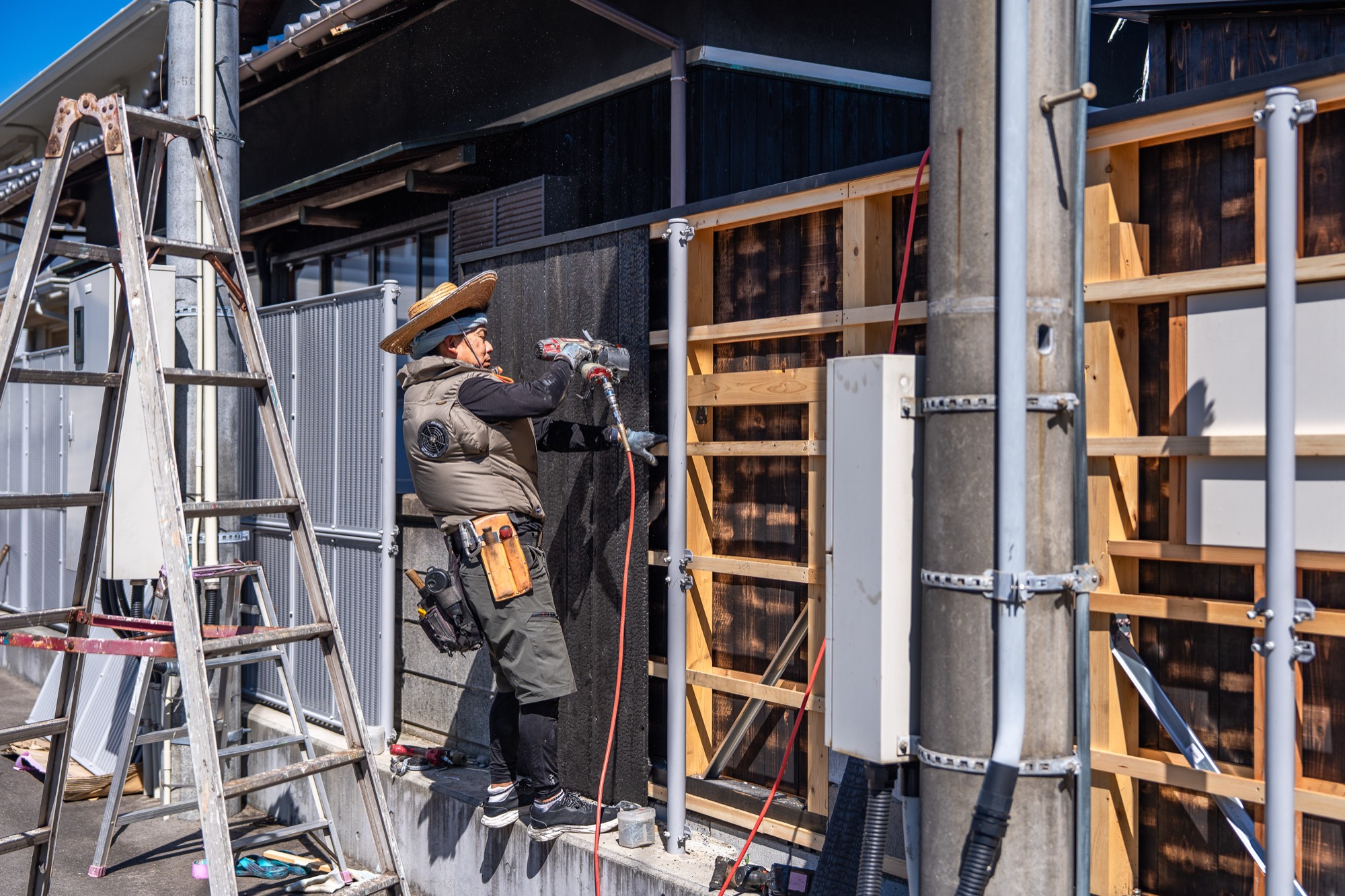
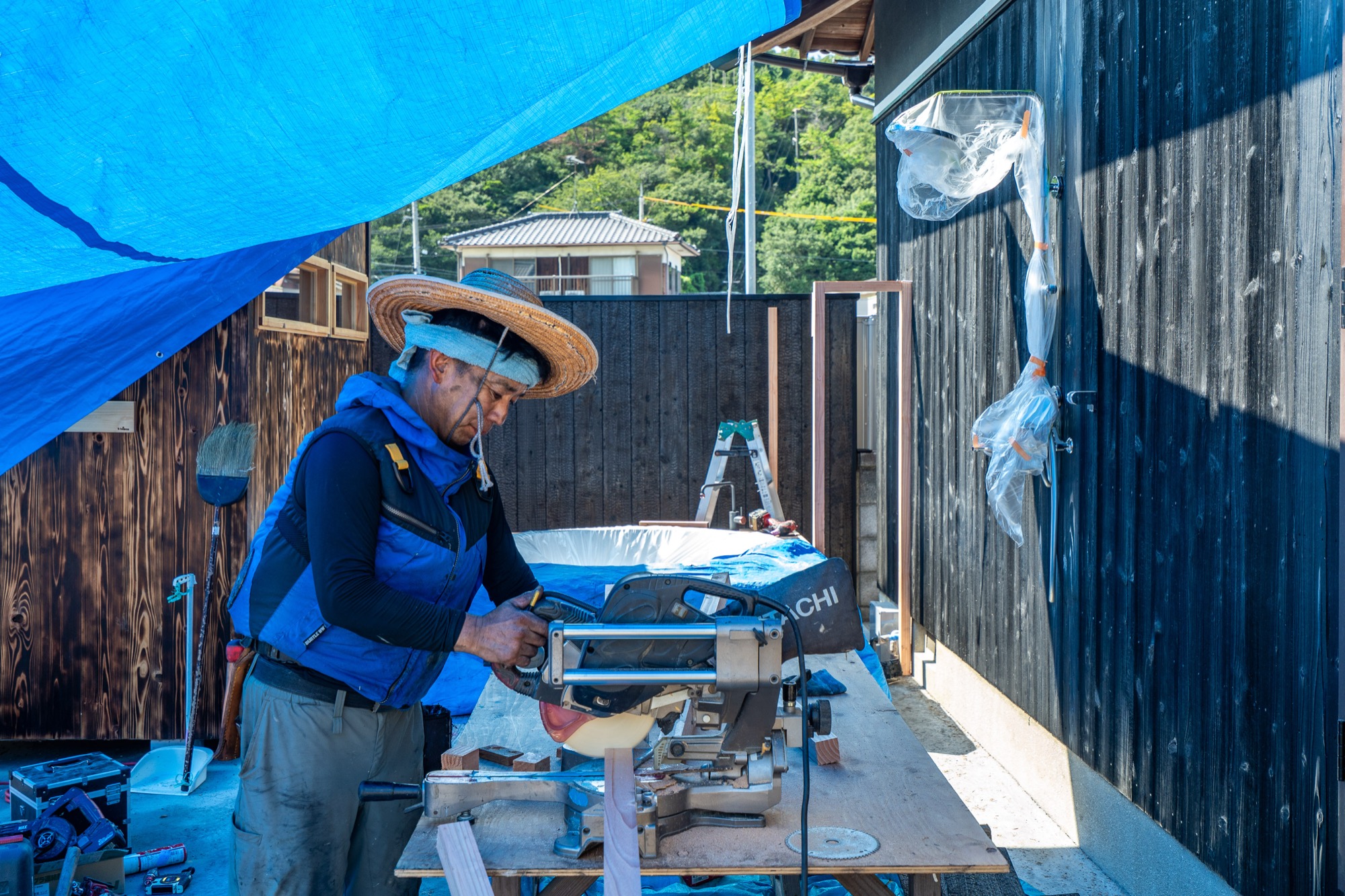
The construction was by Kenchiku Kobo Oyama, the only builder on Naoshima. People who know the island, building an island house. Valuing local connections wherever we could — that accumulation is the core of this house.
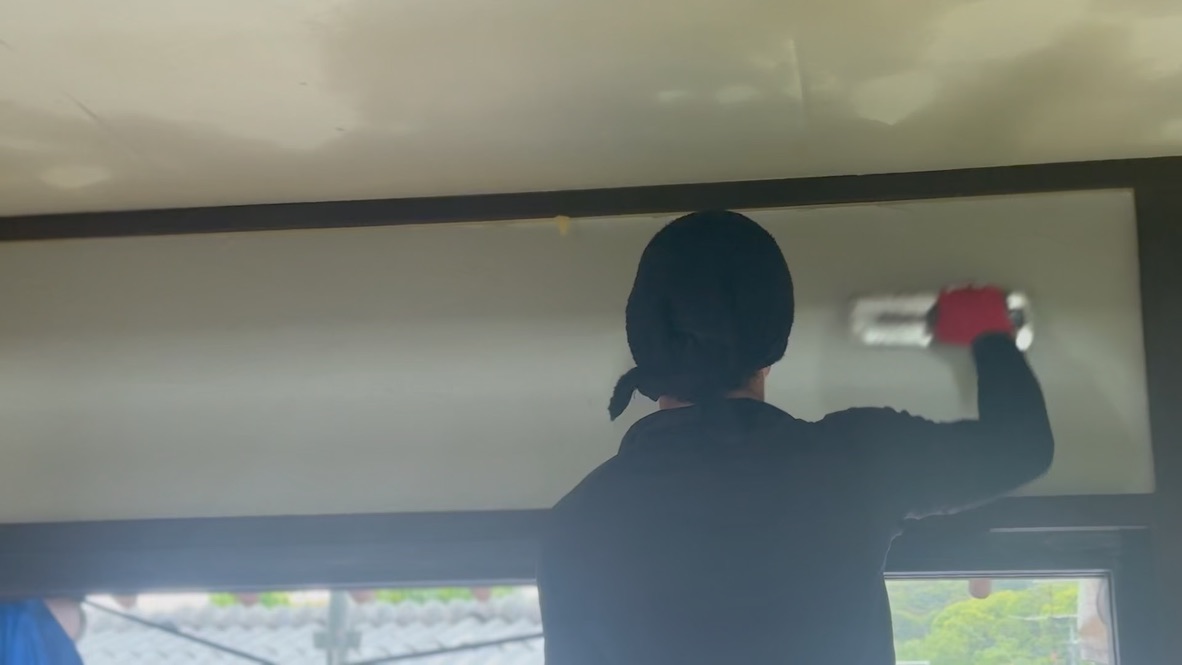
Walls born of a plasterer’s hands.
The walls are shikkui lime plaster, finished with a trowel by a plasterer. Two textures, “harukaze” (spring breeze) and “hakebiki” (brushed), adjusted again and again so the rooms look their best when the light moves around them. No two walls are the same.
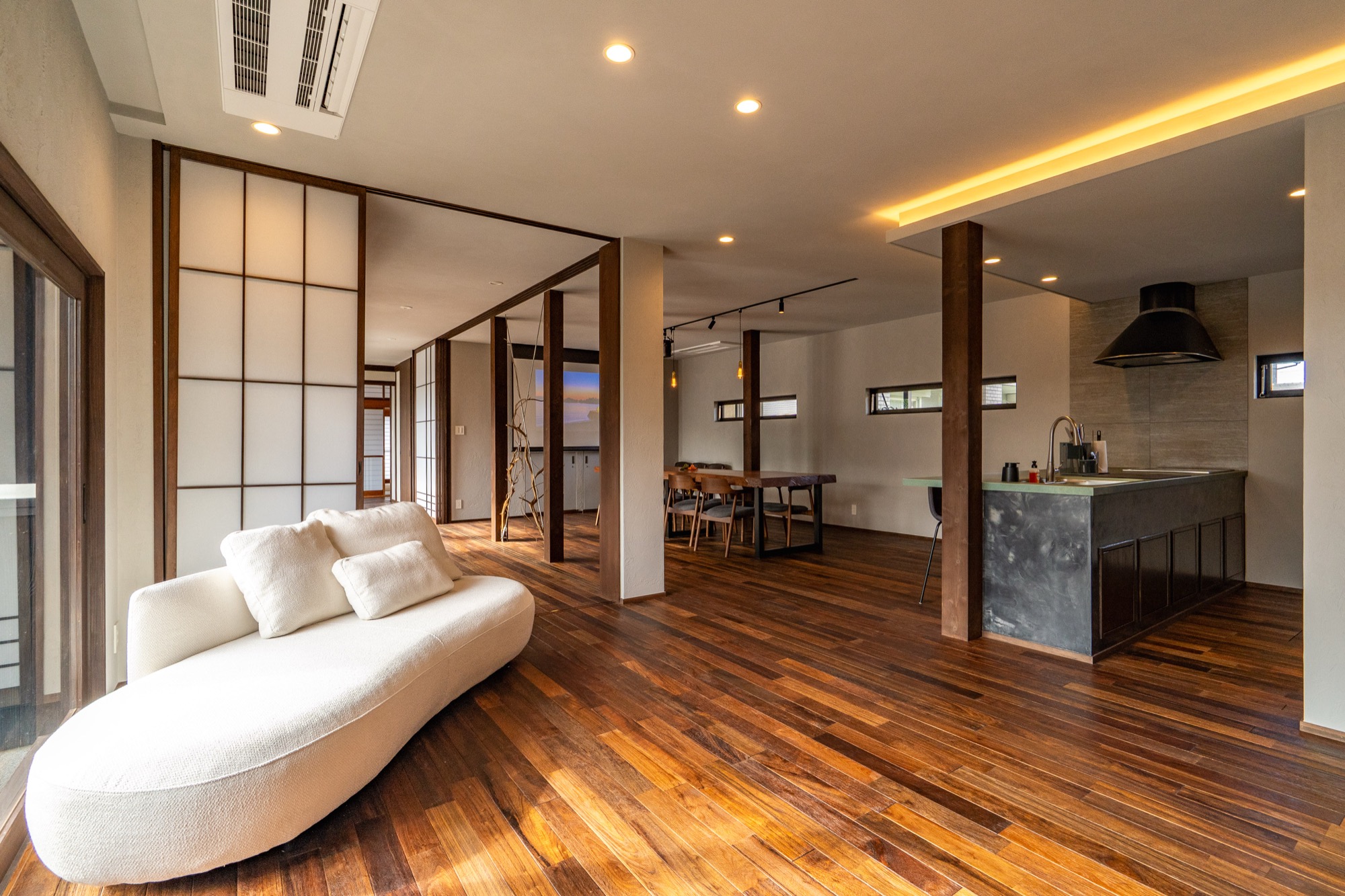
Sen wood, rooted in this land.
The sen wood comes from a local timber merchant, through the hands of Yuki Kumagai, third generation of Yamaichi Mokuzai. Not a prized wood from far away, but wood from this land. Where it grew, whose hands it passed through — we chose only materials whose history we know.
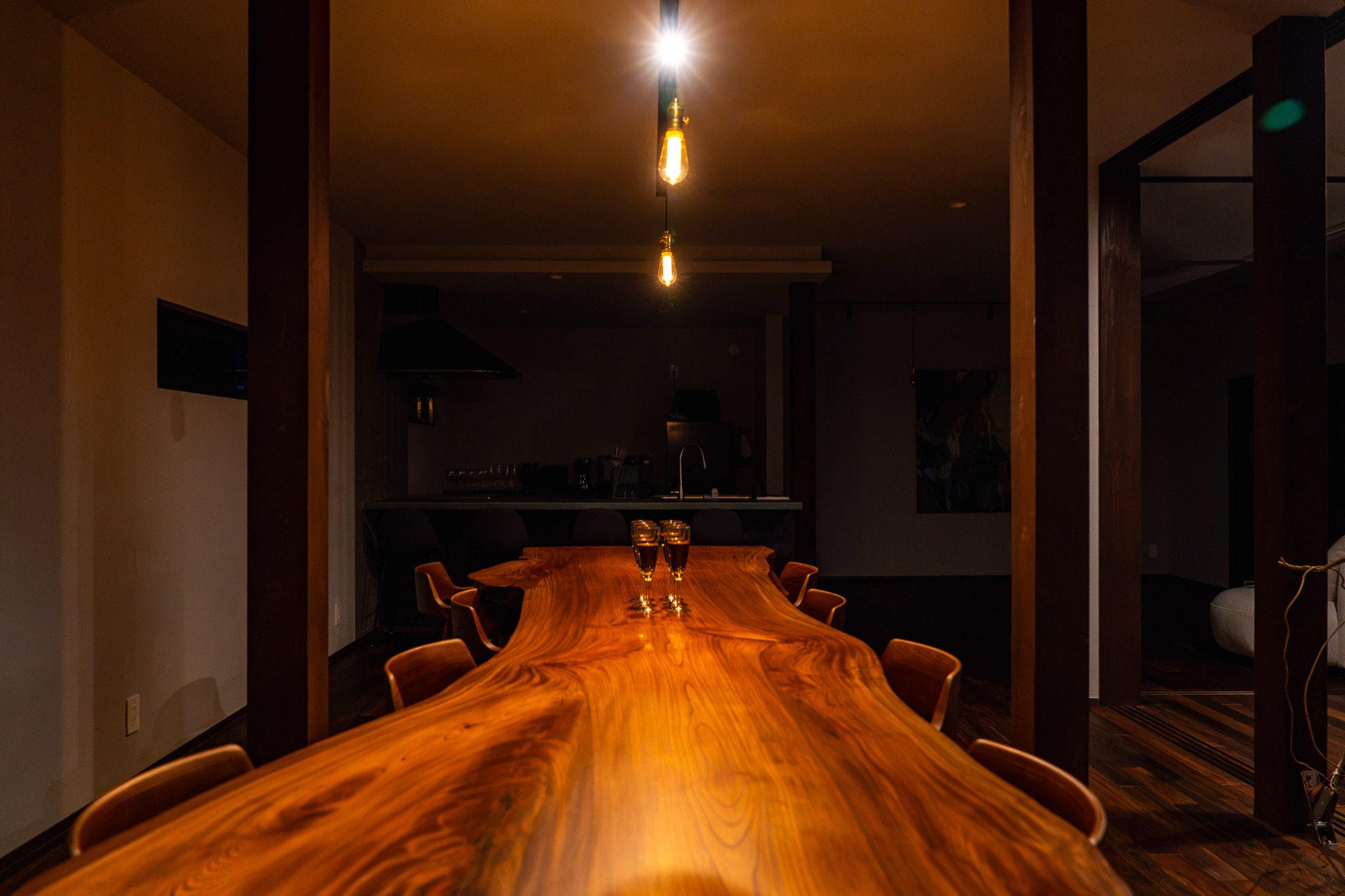
The single-slab dining table is sen wood too, a special piece selected for us by Yuki Kumagai of Yamaichi Mokuzai.
Walnut, finished in uzukuri.
The floors are walnut. A craftsman gave each board an uzukuri finish, brushing away the soft wood so the grain stands out — a traditional handcraft. Barefoot, you feel the grain under your soles. The more it is used, the deeper its lustre becomes.

Each one, made with care.
Nothing here is the same as anything else. Each piece holds someone’s extra effort. So this house speaks to you through touch, before words.
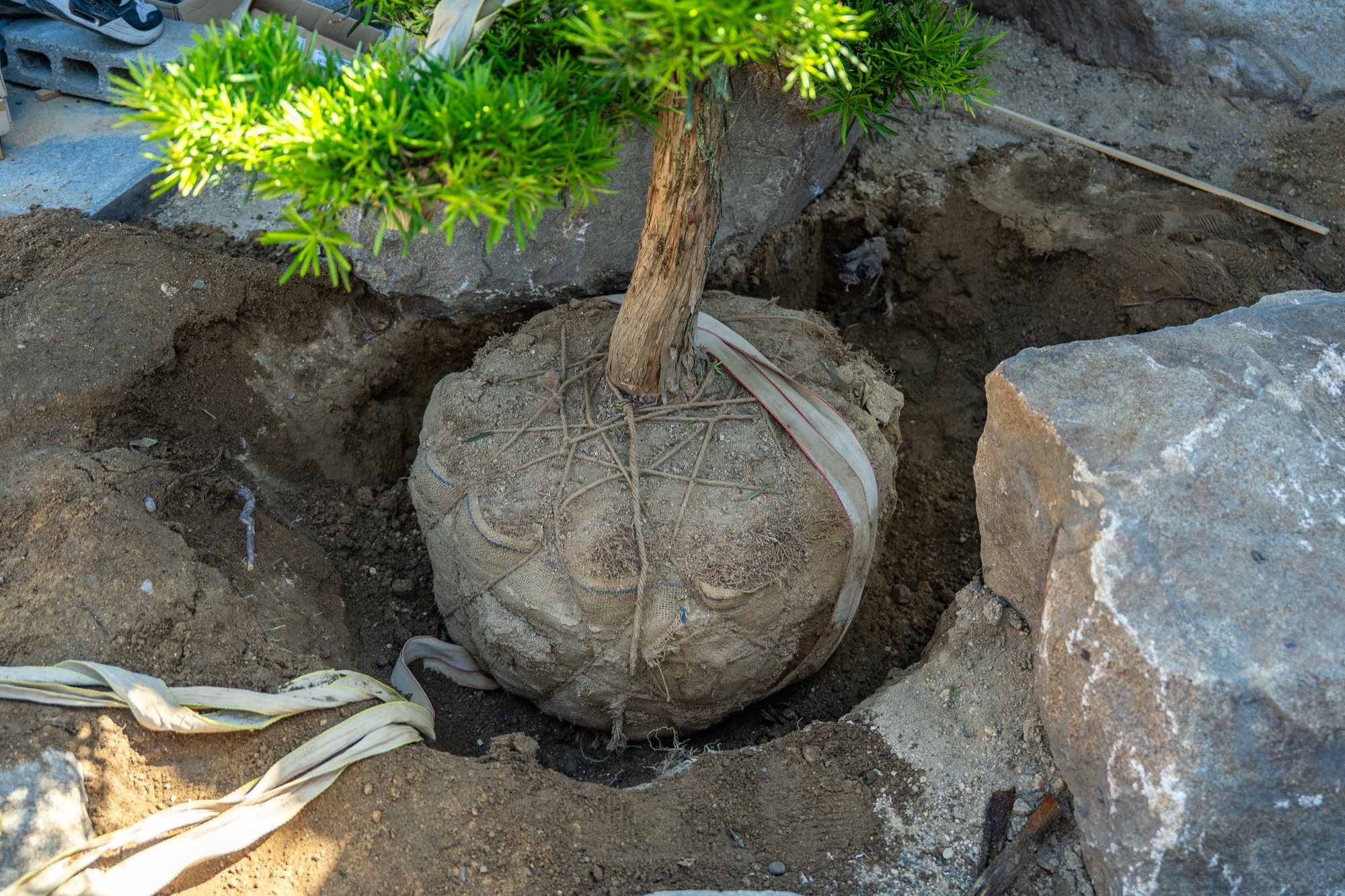
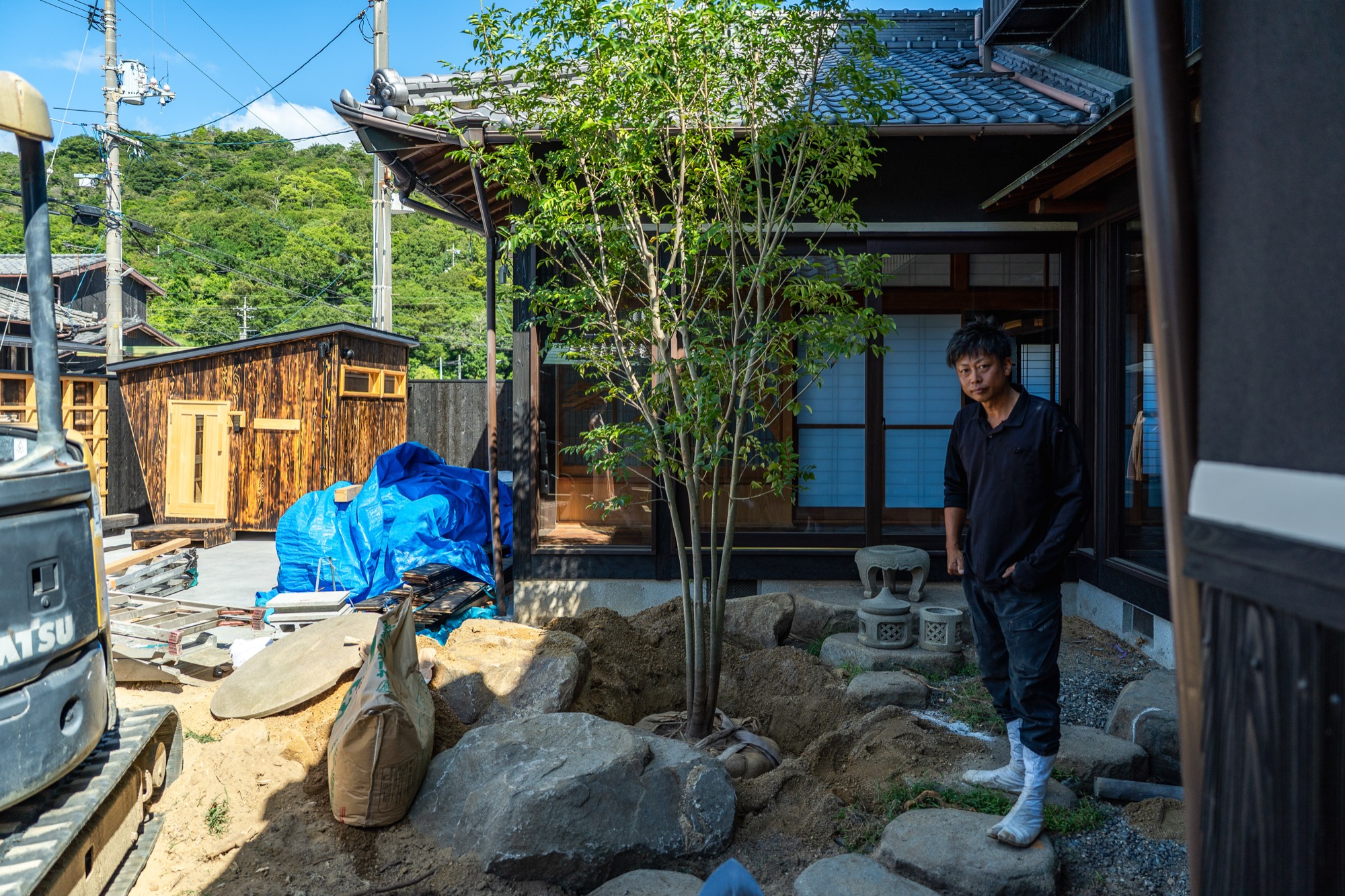
The garden, by hand, too.
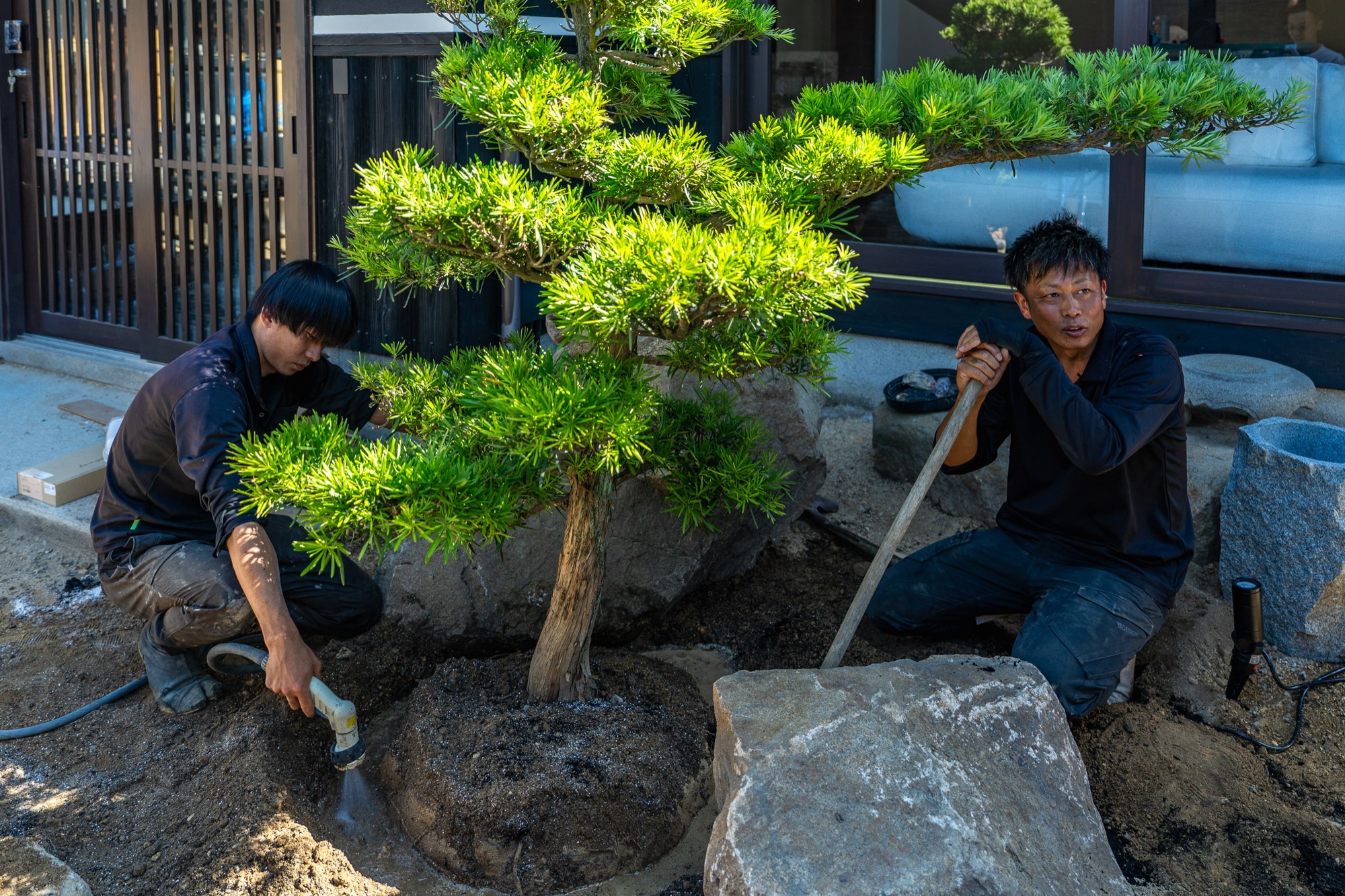
The garden is not a ready-made design either. A gardener from Okayama set the stones, planted the maki (podocarpus) and laid the moss. Stone, moss and a single maki. The maki is an auspicious evergreen, said to embody sincerity and a love that never fades. Placed one by one to suit the wind of this land — a garden that takes its time to settle into the island.
You can tell by touch what was made with care. Please, touch it with bare hands and bare feet.
The noren: waves of the sea, wind of the island.
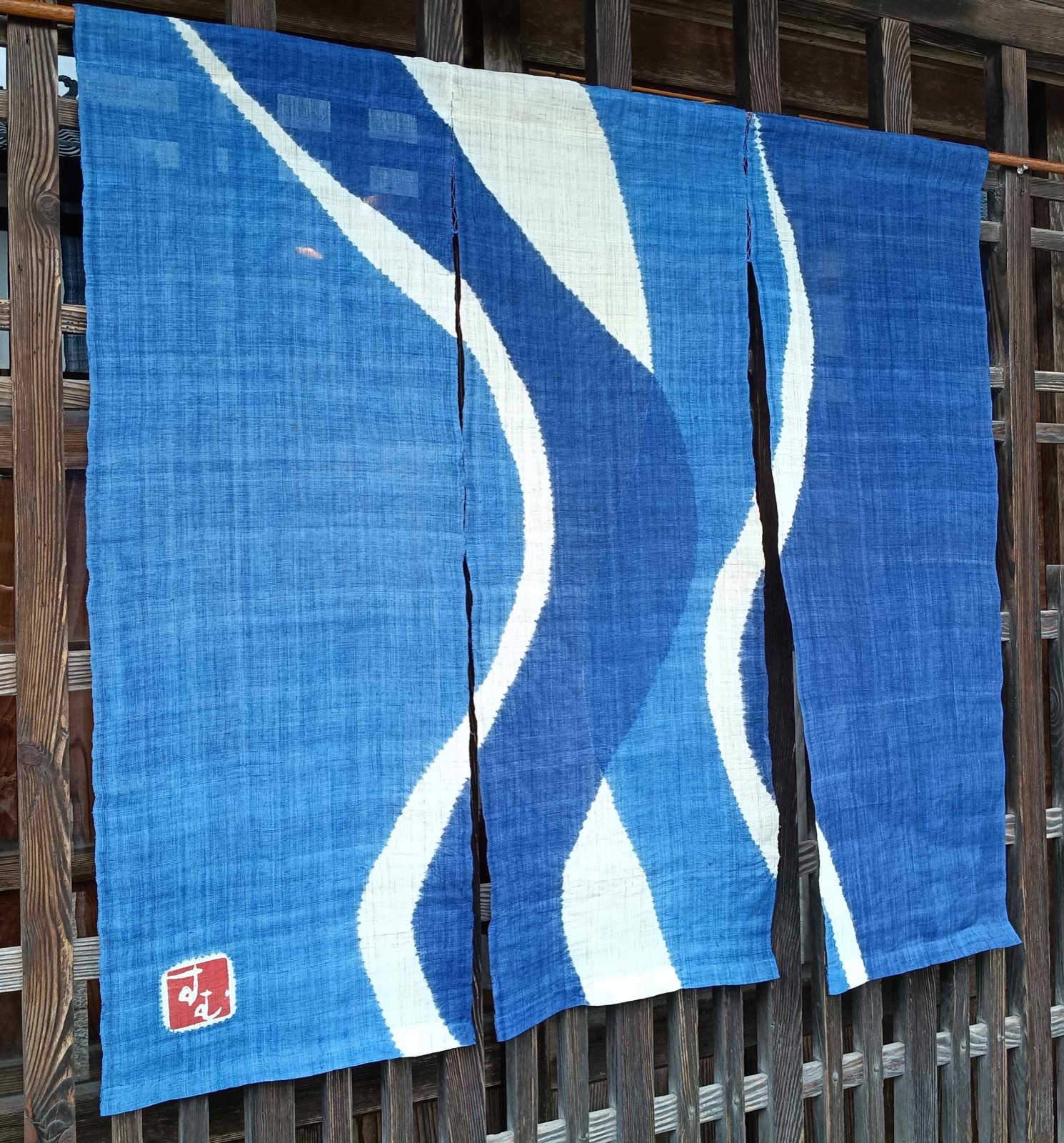
The indigo noren at the entrance was commissioned from textile artist Yoko Kano and her daughter Kazuho of Hinoki Kusakizome Textile Studio (Katsuyama, Maniwa, Okayama), known for the Naoshima Noren Project that colours the eaves of the houses in Honmura, and made for umu from scratch.
Plant-dyed indigo on raw hemp. Using the curves of the umu logo, it depicts the waves of the Seto Inland Sea and the wind crossing the island. Each time the three panels sway, the shape of the waves changes slightly.
The handwork of an artist who has dyed the stories of more than fifty homes in the Art House Project village into noren. One of them now welcomes you at the door of this house.
Reference:Hinoki Kusakizome Textile Studio/Benesse Art Site Naoshima “Naoshima Noren Project”